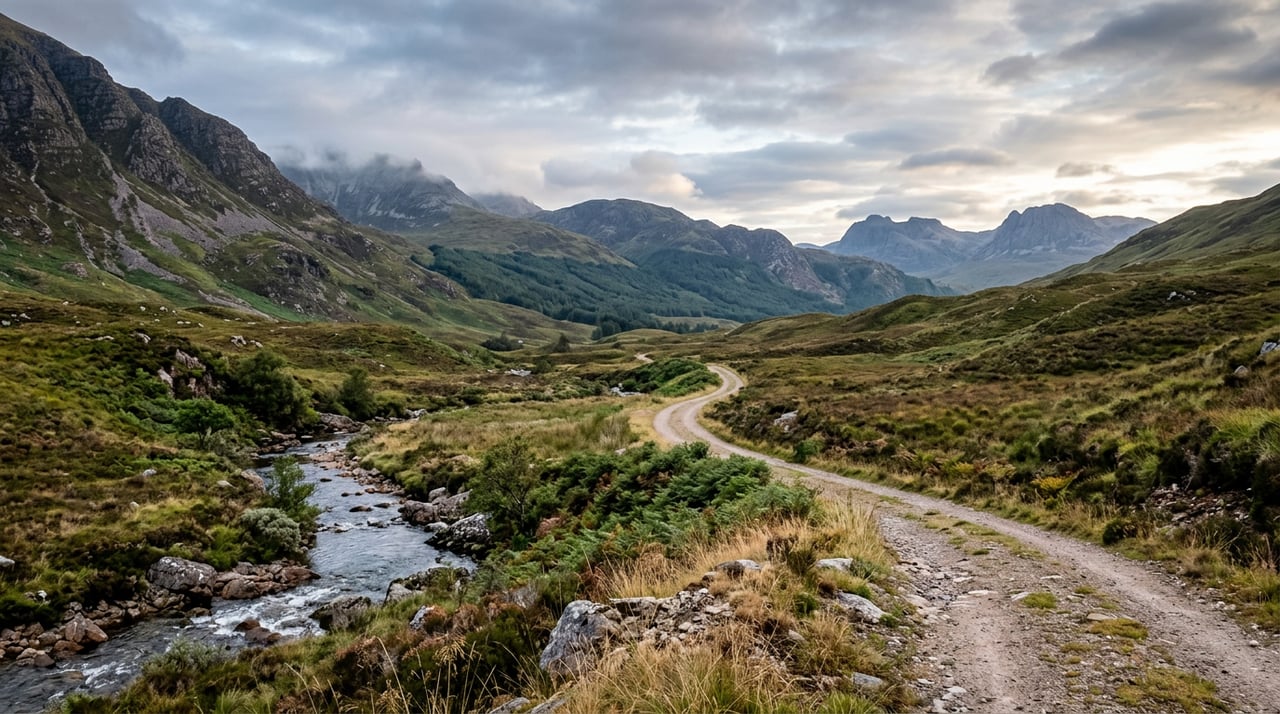
Drive Bishop Hollow Road on any ordinary Saturday and you will pass a tree line, a stretch of split-rail fence, and no sign explaining what sits behind either one. No trailhead. No parking lot. No posted hours. If you have lived in Newtown Square for more than a few years, you have probably assumed the obvious thing: that's preserved land, someone is keeping it wild, eventually there will be a trail map.
That assumption is wrong, and the reason it's wrong tells you something real about how this town holds onto open space.
The 240 acres behind that fence belong to the Garrett Williamson Foundation and were given to serve children rather than public recreation.
A Bequest, Not a Conservation Easement
In 1912, Elizabeth Garrett died and left her farm on what is now Bishop Hollow Road with instructions that read almost like a covenant. The property was to be used, in her words, "for the support and maintenance of poor children and deserving single women," with children cycling through the main lodge across the spring, summer, and fall months, each group succeeded by the next in the same fashion.
That single sentence, written more than a century ago, still defines the property's purpose. Garrett Williamson today runs a licensed child care and learning center on the property along with an agricultural education division and a summer camp. The 240 acres function as a working campus for kids in the foundation's care, not as a nature preserve managed for public recreation. There is no conservation mandate keeping hikers out. There is a mission written into the original bequest that simply never included the general public as an intended beneficiary.
That distinction matters if you have ever wondered why a piece of land this size, sitting inside a town otherwise dense with sidewalks and driveways, has stayed almost entirely undeveloped for over a hundred years without becoming a township park. It was never on a path toward becoming one. It was built, from the start, to serve a much narrower purpose.
Seasonal Bird Walks, By Arrangement
The exception is deliberate and small. Garrett Williamson opens its gates for seasonal guided bird walks, co-sponsored with Bird Town PA, the Newtown Square Environmental Advisory Council, and the Chester Ridley Crum Watersheds Association. This spring's walk ran May 9 from 8 to 10 a.m., led by birders Mike McGraw and Phil Witmer, and covered ground that includes open fields and meadows, a tributary of Crum Creek, and forest dominated by beech trees. A farmed educational garden on the property draws its own share of birds, which is part of why the walk works as a program in the first place.
The fall counterpart follows the same format each year, timed to the peak of fall migration, when warblers, sparrows, and both black and turkey vultures move through, with hopeful sightings of bald eagles and bobolinks. It is, by design, one of the only ways a resident who isn't enrolled in Garrett Williamson's programs will ever set foot on what local organizers have called the last large open parcel in Newtown Square.
If you want to go, watching for the announcement through the Newtown Township calendar or the Chester Ridley Crum Watersheds Association's event listings is the way in. There is no general admission. The walk exists because a handful of organizations coordinate it every year, not because the land has been opened up as a matter of policy.
A Mile Away, the Opposite Model
Less than a mile from Bishop Hollow Road, on Sandy Flash Drive, sits a property built around the exact opposite premise. The Colonial Pennsylvania Farmstead occupies 112 acres leased from Ridley Creek State Park, restored to its late 18th century appearance, and its entire purpose since the education program began in 1974 has been public access. It is open to visitors on weekends, generally Saturday and Sunday from 11 a.m. to 4 p.m., with paid admission and costumed guides demonstrating period farm skills.
Even the road it sits on carries a public story. Sandy Flash Drive is named for the Terror of Delaware County, a Revolutionary-era highwayman whose exploits became local folklore, and the farmstead leans into that history directly with its own fireside storytelling program, Shades of Sandy Flash, built around his legend.
Here's the comparison that actually clarifies things:
| Garrett Williamson | Colonial Pennsylvania Farmstead | |
|---|---|---|
| Acreage | 240 acres | 112 acres |
| Founded | 1912, as a children's bequest | 1974, as a public education program |
| Regular public access | None | Weekends, roughly April through November |
| Path to visit | Occasional co-sponsored bird walks only | Standing admission, posted hours |
| Governing purpose | Child care and agricultural education for enrolled children | Public interpretation of 18th century farm life |
Both properties sit inside the same square mile of Newtown Square. Together, they show how different founding missions shape the way open land is used.
What's Actually on the Fall Calendar
The Farmstead's active season is already underway this month. Its Harvest Table Fundraiser ran September 12, and the next confirmed date on the public calendar is Fairytales and Fables Day on Saturday, October 31, from 11 a.m. to 4 p.m., where narrators lead visitors through the farm telling family-friendly versions of old fairy tales while demonstrating 18th century skills along the way. Admission runs $12 for adults and $8 for children ages 4 to 12, with last entry at 3 p.m.
That is the rhythm of a property designed for repeat visits. Garrett Williamson's calendar, by contrast, offers seasonal bird walks for residents who aren't campers or parents enrolled in its programs, with dates published by partner organizations rather than a standing schedule you can bookmark.
What This Means If You Live Here
The easy version of this story is "hidden gem." The more useful version is that Newtown Square holds two very different kinds of open land within walking distance of each other, and the difference isn't zoning or conservation status. It's the document each property was founded under. One was deeded to serve children in 1912 and has stayed faithful to that purpose for over a century, opening its gates only when a coalition of local groups builds a reason to. The other was designed from 1974 onward as a public classroom and treats regular visitors as the entire point.
If you have lived here for years and never walked either property, that's not really a gap in your local knowledge. It's evidence that both are doing exactly what they were built to do. Garrett Williamson offers limited public access by arrangement; the Farmstead welcomes visitors on a weekend schedule.
For anyone thinking about what makes a town like Newtown Square hold its shape over decades, that's worth sitting with. The land here isn't preserved by accident, and it isn't open by default either. Both are choices someone made a long time ago, and both are still being honored.
If you're curious what else in Newtown Square works the same way, or you're weighing what a home near this kind of open space is actually worth, the Houder Nuñez-Strid Team knows this corner of the Main Line block by block. Reach out to schedule a confidential market consultation.